Custom Metalwork Built Where You Need It
Mobile Fabrication in Hartland for on-site assembly, structural installations, and custom metal components without transporting materials to a shop
A farm needs a custom loading chute built in place at the barn entrance, or a property owner requires railings fabricated and installed on an existing deck frame without dismantling the structure. Mobile fabrication from 207 Welding & Fabrication addresses these situations by bringing cutting, forming, fitting, and welding equipment directly to the installation site in Hartland. The work progresses from measurements taken on location through final assembly, eliminating fit-up problems that occur when components are built in a shop and transported for installation.
The fabrication process begins with on-site measurement and design confirmation, followed by cutting steel tubing, angle iron, or plate to the required dimensions using portable saws or plasma cutters. Components are test-fitted against existing structures, adjusted for alignment, and tack-welded in position before final welds are completed. This approach allows real-time adjustments based on actual conditions rather than relying on drawings that may not account for structural variations or out-of-level foundations.
Arrange an initial consultation to discuss design requirements and determine whether the project scope suits mobile fabrication or requires shop-based construction before transport.
Why Certain Projects Are Built On-Site
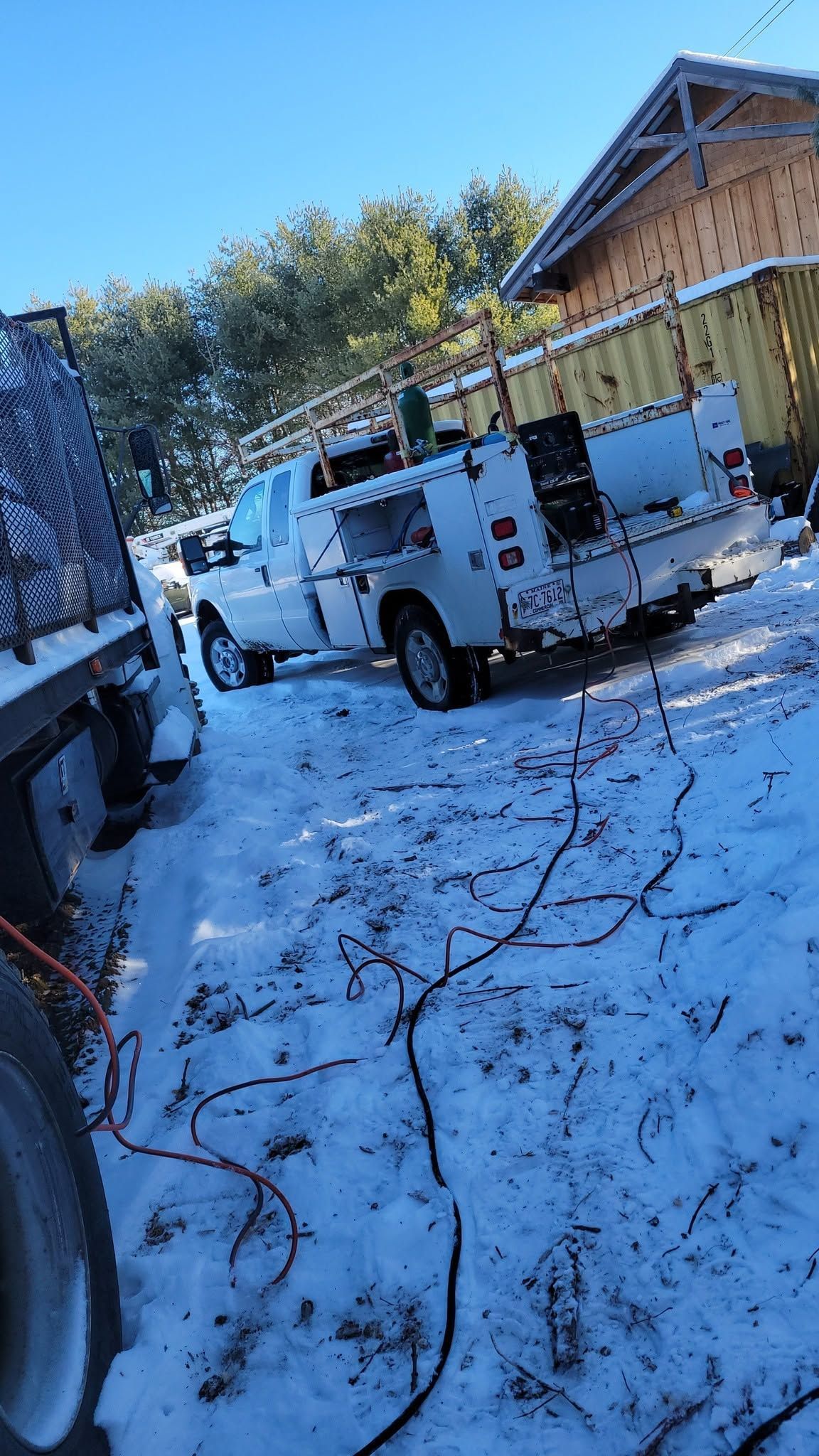
Mobile fabrication works best for installations where precise fit to existing structures matters more than complex machining or intricate pre-assembly. The fabricator arrives with metal stock, a portable bandsaw or chop saw for cutting, a welding machine with appropriate electrodes or wire, angle grinders for edge preparation, and measuring tools including levels and squares. Material is cut to dimension based on actual measurements, edges are deburred, and components are clamped or temporarily fastened to verify alignment before permanent welding begins.
Once the fabrication is complete, you see metalwork that matches the exact dimensions and angles of the installation location, components that align with mounting surfaces without gaps or forced fits, and welds that fully connect structural members without field modifications that weaken joints. The installation is load-ready as soon as the metal cools, though finish coatings like paint or galvanizing spray may be applied afterward depending on exposure conditions.
The service handles structural frames, railings, brackets, gates, and equipment mounts that benefit from being built in place. It is not suited for projects requiring precision machining, complex bending with press brakes, or assemblies with tight tolerances better controlled in a shop environment. Material procurement is coordinated before the scheduled fabrication date to avoid delays..
Answers to Common Fabrication Questions
Before committing to on-site fabrication, property owners in Hartland typically ask about design flexibility, material options, and how the process differs from shop-based work.
What design limitations apply to mobile fabrication?
Projects are limited by the capacity of portable equipment, so complex curves requiring hydraulic bending machines or components needing milling and drilling beyond handheld tools are better suited for shop fabrication. Straightforward structural assemblies, railings with standard bends, and frames using welded joints rather than bolted connections work well in the field.
How is the design finalized if measurements are taken on-site?
The fabricator takes initial measurements during the consultation visit, prepares a design with dimensions and material specifications, and confirms the plan with you before purchasing materials. Final adjustments are made during the fabrication process if actual installation conditions differ slightly from initial measurements, which is common with older structures that have settled or shifted.
What materials are practical for mobile fabrication work?
Mild steel tubing, angle iron, flat bar, and plate stock are the most common materials because they are readily available, easy to cut and weld with portable equipment, and suitable for most structural applications. Stainless steel and aluminum can also be fabricated on-site, though they require different welding processes and filler materials that add to equipment setup.
When should I choose mobile fabrication over having the work built in a shop?
Mobile fabrication makes sense when the installation location is difficult to access with finished assemblies, when existing structures dictate exact dimensions that cannot be known until measurement on-site, or when the project involves integrating new metalwork with old framing that may not be square or level. Weather considerations in Maine may require scheduling during dry periods for outdoor fabrication.
How are the finished components protected from rust?
Raw steel is typically coated with a rust-preventive primer immediately after fabrication, followed by finish paint once the primer cures. Galvanizing spray or cold-galvanizing compounds are used for components that will face continuous moisture exposure, and stainless steel is selected for applications where corrosion resistance is critical and coating is impractical.
207 Welding & Fabrication provides mobile fabrication for custom metalwork throughout Hartland, addressing projects where on-site assembly ensures proper fit and eliminates transportation challenges. Contact the business to review your project requirements and determine the best fabrication approach for your specific installation.